The total cost of ownership (TCO) of an asset is more than its production cost, but instead the sum of the cost for designing, manufacturing, maintaining, running, and finally disposing or reusing the product. Because TCO incorporates more than the production cost of an asset, it provides a more accurate estimate of ROI.
As industries mature and markets tighten, as with the oil and gas sector, evaluating and lowering TCO is critical to increase profits. TCO models may vary depending on equipment or industry. It is the responsibility of the Project manager and the Product Champion to clearly define the TCO model and the relevant cost elements, including the identification of key cost drivers, when specifying the TCO requirements and targets for the asset.
Life cycle cost analysis
A life cycle cost analysis (LCCA) evaluates various financial inputs over the life of an asset to determine the most cost-effective option or to calculate the estimated total cost of an asset.
Scope is critical when conducting an LCCA, and while organizations can calculate different financial inputs, generally these include:
- Designing
- Manufacturing
- Installation
- Maintenance
- Operating
- Depreciation
- Decommissioning
- Resale or disposal
Value engineering can be applied during the design and manufacturing stages to optimize costs and support TCO reduction.
Asset Life Extension and TCO
As industries increasingly strive to reduce operational costs, extending the life of aging assets is critical for reducing TCO. While asset life extension (ALE) won't decrease the TCO for an individual asset, it will decrease costs for asset lines.
However, ALE comes with its own challenges. As assets age, maintaining integrity becomes increasingly challenging and requires a clear ALE process. Stakeholders must plan and implement measures to maintain and monitor aging equipment throughout the entire equipment lifecycle to preserve cost benefits while reducing potential risks.
Optimized maintenance and TCO
Ongoing maintenance can comprise a large percentage of an asset's TCO, and as organizations push to extend the life of equipment, optimizing maintenance will be essential. Process optimization can further support TCO reduction by streamlining maintenance activities and improving operational efficiency. Below are two examples of maintenance methodologies organizations can implement to reduce TCO.
Risk Based Inspection
Risk based inspection (RBI) is an asset integrity management methodology used to prioritize assets for inspection based on associated risks. It is commonly used in the oil and gas industry, but is applicable for any asset-intensive industry. RBI can reduce maintenance costs by reducing preventative maintenance and extending maintenance intervals. Downtime reduction is another key benefit of risk-based inspection, as it helps minimize unplanned outages through more targeted inspection and maintenance. During an RBI assessment, non-critical assets are identified and their inspections reduced, streamlining maintenance and reducing costs.
In oil and gas, turnarounds (TARs) are a major source of maintenance costs and accidents. During a turnaround the facility is non-operational, leading to losses in production and impacting revenue. From an operational perspective, it is beneficial to reduce turnaround exposure while maintaining safety.
Using RBI, the number of PMs necessary is reduced and can be eliminated during the scope of a TAR. Considering the size and impact TARs have on maintenance costs, reducing TARs by even a few days has significant impact on revenue.
Reliability Centered Maintenance
Reliability centered maintenance (RCM) is an asset care/maintenance development and optimization methodology focused on maximizing availability and efficiency while reducing maintenance cost and total cost of ownership. RCM can reduce TCO in three ways:
- RCM increases equipment availability. A RCM analysis targets critical assets with maintenance strategies designed to minimize downtime. Preventative maintenance (PM) or predictive maintenance are used as part of an overall RCM strategy to increase equipment availability.
- RCM leads to greater maintenance efficiencies. With failure modes categorized during the analysis phase of a RCM assessment, operators can quickly diagnose equipment failure – leading to less time for each repair. Root cause analysis is also used to identify and address underlying issues, further improving maintenance strategies. When correctly applied, RCM leads to a reduction in routine maintenance workload by reducing the number of tasks and lengthening intervals between tasks.
- RCM cuts costs with targeted and flexible strategies. RCM increases efficiency by using flexible maintenance strategies. Rather than using one approach, RCM combines reactive, proactive, predictive, and condition-based maintenance techniques depending on asset criticality or failure modes.
Conclusion
Evaluating and decreasing TCO is becoming ever more important as industries mature and look to increase profits by reducing costs. Conducting life cycle cost analysis', increasing asset life extension, and streamlining maintenance are important tools organizations should implement to better control their total cost of ownership.

📰 Download free eBook – How to drive performance with asset management
Get Inspired
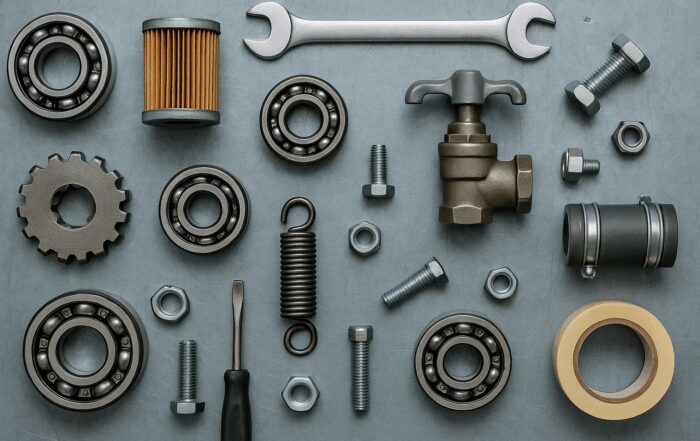
Align your teams with a clear glossary for MRO spare parts management. Improve reliability, cut costs, and optimize inventory with MaxGrip's proven approach.

Many organizations invest in EAM and APM with high expectations, yet struggle to turn digital intent into real operational results.

Hoe blijf je toekomstbestendig als asset-intensieve organisatie? Leer van de praktijkcase Noordgastransport over maintenance maturity en asset management.