A leading US energy company, operating a number of complex refineries and multiple renewable diesel facilities, has recently experienced rapid growth in the number of employees and operating countries. This growth drives the need for standardized reliability practices across its expanded fleet. To facilitate this growth, the company partnered with MaxGrip to implement a multi-site Reliability Centered Maintenance (RCM) program and leverage Cenosco's IMS Suite. The program was designed to enhance operational availability, optimize maintenance strategies, and ensure fleet-wide consistency and sustainability.
Ambitions: Fleet-Wide Comprehensive Plan
After experiencing recent growth, the energy provider now operates multiple refineries and a number of renewable diesel facilities. This rapid growth brought a significant expansion in fleet capacity and underscored the need to establish a unified culture and clear organizational identity. Additionally, to enhance competitiveness, the company chose to focus on deploying aggressive innovation and advanced technology to improve reliability while reducing operational downtime.
The growth also presented the opportunity to align reliability practices across all sites under a central driving force—one team united across all sites with a commitment to sustainability and consistency. By establishing a comprehensive, risk-based asset profile, the company aims to effectively mitigate vulnerabilities and foster a strong, cohesive culture. They chose to leverage MaxGrip's expertise and Cenosco's IMS RCM tool to optimize asset care strategies, maximizing performance and minimizing maintenance costs.
By partnering with MaxGrip consultants, the company was able to accelerate the RCM program beyond in-house capacity, which set them up to meet their ambitious time to value target. These efforts culminate in an ambitious goal to complete the RCM rollout across all sites within three years, achieving consistent, measurable improvements and a significant reduction in Lost Production Opportunities (LPO).
Approach: From Blueprint to Fleet-Wide Rollout
To proof the success of the approach, the energy company first partnered with MaxGrip to implement a pilot program. This initial phase focused on validating the concepts and methodologies envisioned to deliver tangible value. The pilot allowed the company to confirm that the reliability-centered practices were robust, could be effectively applied, and would resonate with their teams. Additionally, it was crucial to ensure the methodology was not only sound but also scalable across the entire fleet.
Pilot: a Foundation for Success
The energy producer launched the pilot at one of their refineries, focusing on three critical systems. This pilot was designed not only as a proof of concept but also as a mechanism to generate excitement and foster a pull mentality among the sites. The company's Asset Reliability Director emphasized the importance of marketing the initiative to demonstrate its dual benefits: delivering bottom-line value while improving employees' day[1]to-day work. The pilot scope was deliberately limited to five weeks, covering approximately eighty pieces of equipment, to ensure rapid results while involving key stakeholders from all seven refineries. The team drew on the mature RCM practices of one refinery that had already been using Cenosco's IMS Suite effectively. The company engaged reliability, maintenance, and operations representatives from across the fleet to collaboratively execute the program.
A critical tenet of the pilot was the "fail fast" approach—testing innovative methodologies, identifying what worked, and quickly adapting or discarding what didn't. This agility enabled the team to refine processes and ensure that the methodologies were fit-for-purpose and tailored to the company-wide unique operational environment. At the end of the five weeks, the pilot yielded significant improvements, including a clear shift in the risk profile for the selected systems. Using Cenosco's IMS platform, the team managed results, generated detailed reports, and communicated clear maintenance strategies. These strategies were then integrated into the company's CMMS. The pilot not only validated the methodology but also galvanized enthusiasm across the fleet, with one site volunteering to be the first to roll out the full program. This success marked a pivotal step in transforming the company's reliability practices and set the stage for the fleet-wide implementation of the RCM program.
Full Roll-Out across Sites
Building on the pilot's success, the energy producer implemented a structured, three-year plan to implement the RCM program across six sites with diverse geographies, sizes, and resources. To achieve this ambitious goal, the rollout was designed around three core pillars—People, Process, and Plant—ensuring a holistic and scalable approach.
People: A multi-disciplinary, tiered team structure was established, integrating corporate and site project management (PMO) members, RCM leads, and MaxGrip consultants. MaxGrip played a pivotal role in building capabilities through hands-on coaching, training sessions, and quick reference guides. Change management was seamlessly embedded into the rollout, with automated tools simplifying approvals and encouraging employee buy-in. MaxGrip also initiated RCM workshops which brought stakeholders together to rapidly improve data, foster collaboration and shared learning, and ensure knowledge transfer across sites. This focus on engagement and expertise-building helped establish a unified culture of reliability, empowering teams to adopt the program with confidence andownership.
Process: MaxGrip's expertise drove process enablement, redesigning workflows for consistency and scalability. Data harmonization was a critical enabler, addressing gaps in asset registries, design standards, and failure histories. Automated tools pre-populated questionnaires, reduced manual effort by 75%, and streamlined equipment prioritization. By stacking processes that were traditionally sequential, the team achieved a 50% reduction in implementation time. QA/QC processes were similarly accelerated, leveraging standardized, automated quality checks to improve accuracy and reduce resource churn. The integration of SAP with Cenosco's IMS tool further eliminated redundancies, enabling a seamless, digital workflow across the fleet.
Plant: The staggered implementation approach allowed our client to adapt learnings from one site to the next, improving efficiency and reducing errors. Initial efforts focused on critical units, studying approximately 6,000 pieces of equipment across multiple sites. Automated RSL application and digital tools enabled faster RCM analysis, transforming risk profiles and operational strategies. As a result, significant reductions in operational risk were achieved across studied units, with maintenance and operational tasks integrated into the CMMS for real-time execution. By aligning event schedules with site readiness, the team ensured each plant was prepared, capable, and engaged, setting the stage for sustained fleet-wide improvements.
"MaxGrip set us up for success. Their consultants are tremendously knowledgeable, doing a lot of the heavy lifting up front. They integrate the RCM and asset care strategies with our people towards the back-end to make sure our studies and outputs are correct, and that we're actually performing and implementing the change management. We do not want this to be a major disruption to our on-site operations teams, which the program is not. So the hybrid approach with virtual and on-site work helps greatly to realize an overall comprehensive sustainable program for long-term success."
Asset Reliability Director

Benefits: Achieving Measurable Results and Fleet-Wide Excellence
The client, in partnership with MaxGrip, has successfully delivered a scalable and repeatable Reliability-Centered Maintenance (RCM) program. This collaboration has achieved significant operational and strategic outcomes, firmly positioning the company for sustained excellence and competitiveness in the energy sector.
The pilot phase analyzed eighty pieces of equipment in five weeks, generating actionable task lists and igniting enthusiasm across sites to scale the program. By the time the fleet-wide rollout was underway, processes had been streamlined to reduce implementation time from 16 weeks per unit to just five weeks per unit, with weekly equipment throughput growing from fifteen to 400 assets.
Key Metrics and Tangible Outcomes
- Residual risk reduction: impressive decrease in operational risk across studied units.
- Maintenance compliance: improvement from 75% to nearly 100%.
- Data quality: enhancement through harmonization, reducing inconsistencies and manual rework.
- Operational efficiency: processes optimization by over 30%, saving significant time and resources.
Benefits Realized
Improved Maintenance Maturity:
- Consistent care strategies implemented across all sites.
- Strengthened collaboration between maintenance and operations teams.
Operational Efficiency:
- Automated workflows reduced manual tasks, increasing resource availability.
- Equipment data established as a trusted single source of truth.
Sustainability:
- Standardized reliability practices integrated fleet-wide.
- A culture of continuous improvement adopted throughout the organization.
The company's structured multi-site approach to RCM, supported by MaxGrip's expertise, has not only optimized operational risk profiles but also embedded a long-term framework for reliability, efficiency, and sustainability.
Would you like to Learn more about RCM?
Download our free eBook to get a complete guide on what defines reliability centered maintenance, the importance of FMEA and asset criticality, and how it leads to more optimized maintenance strategies that reduce costs while increasing asset availability.
Get Inspired

Many organizations invest in EAM and APM with high expectations, yet struggle to turn digital intent into real operational results.

Choosing the best maintenance strategy for your organization is a constant trade-off between risk mitigation and cost savings. Selecting the right mix of corrective, preventive and predictive maintenance is crucial for asset reliability, operational efficiency, and financial sustainability.
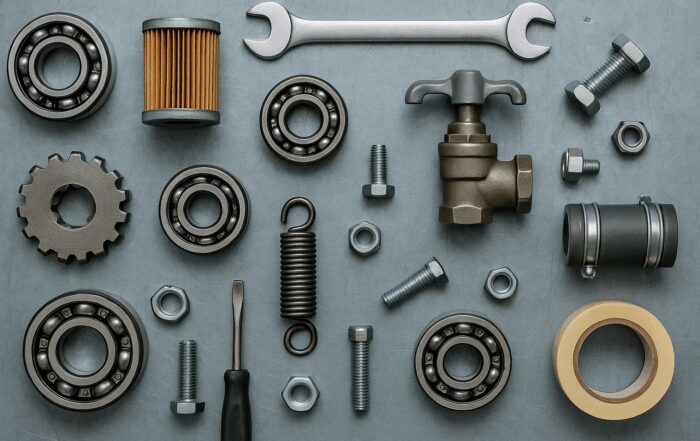
Align your teams with a clear glossary for MRO spare parts management. Improve reliability, cut costs, and optimize inventory with MaxGrip's proven approach.