Recent Verdantix research shows that a majority of maintenance and reliability leaders plan to increase investment in Enterprise Asset Management (EAM) and Asset Performance Management (APM) solutions. The direction of travel is obvious; Yet despite this momentum, many initiatives still struggle to gain approval or fail to deliver the expected results once systems go live. The issue is not a lack of belief in digitalization. It is the difficulty of turning investment into measurable business impact. That gap between intention and outcome is exactly where many EAM and APM programs succeed or fail.
From strategic intent to a business case that holds up
Verdantix highlights a challenge we encounter frequently in practice. Maintenance and asset management teams understand the benefits of EAM and APM, but those benefits are often difficult to translate into a business case that resonates with executives, finance, and other stakeholders.
Improved planning, better data visibility, and predictive insights are valuable. But unless they are connected to concrete outcomes such as reduced downtime, cost control, or improved throughput, they remain abstract.1
At MaxGrip, we help organizations bridge this gap by reframing EAM and APM initiatives as business transformation programs rather than technology projects. That shift in perspective is often what enables faster decision making, clearer prioritization, and sustained executive support.
Maturity before technology
One of the most important findings in the Verdantix research is the emphasis on understanding maintenance maturity before selecting or scaling software. This aligns strongly with what we see across industries.
Organizations frequently underestimate the effort required to prepare their data, processes, and organization for digital tools. When asset hierarchies are inconsistent, maintenance strategies are unclear, or roles and responsibilities vary by site, even the best software struggles to deliver value.
Phased implementation reduces risk and accelerates payback
Verdantix also emphasizes that phased implementation approaches consistently outperform large, one-time deployments. This principle is central to how MaxGrip delivers EAM and APM programs.
This approach reduced implementation risk and allowed the organization to realize value early, rather than waiting until the final site went live.
Technology and transformation go hand in hand
These examples illustrate a core principle behind how MaxGrip works: MaxGrip delivers the technology and the transformation. Clients do not just receive an EAM or APM system; They get a solution implemented right and aligned with their business goals from the start. That alignment is what drives faster payback and lowers the risk typically associated with large digital initiatives. Technology enables performance. Transformation makes it stick.
Speaking the language of both the plant floor and the boardroom
Verdantix also reinforces something we see in almost every EAM and APM program: success depends on whether people at different levels of the organization can truly understand and engage with each other.
End users need systems that support how work is actually executed on the plant floor. Management needs insight, control, and confidence that investments are delivering results. When these two perspectives are not aligned, frustration grows on both sides and value is lost. Effective EAM and APM initiatives therefore require more than technical configuration. They require translation. Translation between operational reality and management expectations.
This is often where MaxGrip plays a critical role. We act as the bridge between end users and leadership, ensuring that operational needs are reflected in system design, while management objectives are embedded in governance, KPIs, and decision-making structures.
When both sides speak a shared language, interaction improves, trust increases, and adoption follows. That alignment is not just important for approval at the start of a program. It is essential for long-term value creation.
Moving from implementation to impact
Verdantix research confirms what many organizations already suspect: investing in EAM and APM is necessary, but not sufficient.
The organizations that see lasting results are those that combine the right technology with disciplined execution, organizational alignment, and a clear focus on value realization.
That is where MaxGrip supports its clients. Not by selling software, but by ensuring that EAM and APM investments translate into measurable improvements in reliability, cost control, and operational performance.
Because real success is not defined by go-live dates, but by what changes on the plant floor after them.
Get Inspired
Five common spare parts challenges that we encounter regularly, illustrated by solutions based on real-world examples.
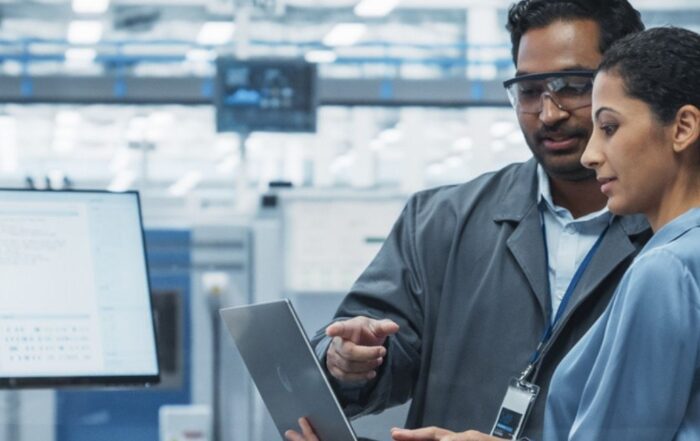
Industrial transformation is shifting from digital ambition to measurable performance. The winners will be those who anchor technology in strong maintenance, reliability, and asset performance fundamentals.
A deep dive into why trust is essential for successful AI in maintenance and asset management, combining Edelman insights with Verdantix research and MaxGrip expertise.