Every maintenance manager knows the feeling: teams racing from one breakdown to the next, spare parts being rushed in at the last minute, production managers pressing for answers, and technicians stretched thin. Firefighting becomes the default mode. While this might keep the plant running in the short term, it comes at the cost of efficiency, safety, high maintenance expenses, and an increased total cost of ownership, undermining long-term reliability. In an era of labor shortages, rising energy costs, aging equipment, and volatile markets, firefighting is more than stressful; it's risky and unsustainable.
MaxGrip regularly encounters this situation across industries. Clients tell us: "maintenance is too reactive," "ROI is unclear, we're seen as a cost center," "safety and compliance pressures keep mounting," and "our assets are aging faster than we can modernize". The good news: there is a structured way forward. By following a step-by-step reliability and maintenance management approach, organizations can reduce reactivity, improve asset reliability, and turn maintenance into a driver of business value.
In this article, senior consultant Justin Satink describes practical steps, supported by MaxGrip's methodology and proven in real-world projects, that will help you escape firefighting mode.
Step 1: Assess the situation, set up strong gatekeeping with effective planning and scheduling
Before you can move forward, you need to know exactly where you stand. Map the current maintenance workload, backlog, and types of breakdowns. Identify which ones are truly urgent versus those that can be addressed in planned work.
This is where gatekeeping is essential. Gatekeeping means filtering and prioritizing incoming work orders so that the maintenance team can focus first on real breakdowns that are critical to safety, compliance, or production. Lower-priority issues can then be scheduled in a planned maintenance window. Many organizations set up a gatekeeping process at some point, but over time it can weaken as people bypass procedures to "just get it fixed." Re-establishing a strong gatekeeping discipline can free up resources, reduce stress, and allow your team to work more strategically.
Effective gatekeeping involves:
- Clear criteria for what qualifies as an emergency
- High quality work orders that later on can be used for P(d)M optimization
- A review process to approve and prioritize work orders
- Cross-functional communication between production, maintenance, and planning teams
- Differentiation in the maintenance teams of planned vs. breakdown maintenance for a better focus
Step 2: Define goals and KPIs
Once you have visibility on your situation and have stopped the constant inflow of low-priority urgent work, establish what success looks like. Select KPIs based on the outcomes your organization needs most: higher uptime, reduced costs, improved safety, compliance assurance. This focus ensures your efforts stay tied to business priorities, helping maintenance shed the "cost center" label.
A strong illustration comes from Danone's Zoetermeer factory, where MaxGrip applied its Asset Improvement Program (AIM). Through structured stakeholder workshops and the establishment of KPI dashboards aligned with strategic goals, the facility reduced backlogs by 25 % and decreased Priority 0 work orders by 15 % in one department. This realignment grounded maintenance in measurable business priorities and helped elevate maintenance's role within the organization.
Step 3: Build a solid foundation with data and criticality assessment
You can't move away from firefighting without an accurate view of your assets. Data cleansing, functional system definitions, and criticality assessment form the bedrock. Use techniques like FMECA to identify high-risk failure modes and prioritize accordingly.
A global packaging company's Dutch paper mill, for example, used recurring FMECA sessions with MaxGrip to determine critical failures and potential performance risks in its paper machines. in its paper machines. The outcome: technical availability rose from 93% in 2021 to 96% in 2024, with downtime on a troublesome winder cut from 120 to 40 hours annually.
Step 4: Choose the right maintenance strategy based on risk
Not every asset requires the same approach. Some can run to failure, while others need time-based, condition-based, or predictive maintenance (PdM). Applying a risk-based maintenance (RBM) framework ensures focus on what matters most: preventing high-consequence failures while avoiding unnecessary work.
This principle was applied at SFPUC's VPSA oxygen plant, where MaxGrip supported the transition to more efficient and reliable operations. By tailoring maintenance strategies to the criticality of assets and streamlining processes, the plant significantly improved operational efficiency and asset reliability. This ensured greater production stability in a volatile market environment and allowed the organization to better manage resources.
Predictive maintenance as part of the strategy
Digital tools play a key role in modern strategies. Predictive analytics and condition monitoring can spot issues before they escalate, but only when aligned with business priorities. The aim is not more data, but actionable insights that prevent failures, reduce downtime, and strengthen decision-making.
RET, Rotterdam's public transport company, works with MaxGrip to embed PdM across the organization. Faced with retiring experts, talent shortages, and the need to digitalize, RET sees PdM as essential for preserving knowledge, boosting reliability, reducing costs, and supporting sustainable public transport. RET's challenge is to scale up their pilots into a companywide approach, with a solid business case, dashboards, change management, and training.
The goal: higher asset reliability, fewer disruptions, more efficient spare parts management, and better decision-making through data and KPIs. Change management is critical, with stakeholders engaged from the start to drive adoption. For RET, PdM is not a hype but a long-term investment in the future of maintenance and public transport in Rotterdam.
Step 5: Implement efficient processes
Strategy only works if it is executed efficiently. That means clear technical job descriptions, clustering preventive maintenance tasks to balance workloads, and robust planning and scheduling. Without this, organizations risk falling back into firefighting mode.
A strong example is a global consumer goods company that partnered with MaxGrip to centralize its asset care program. By bringing maintenance activities, planning, and performance monitoring into a centralized approach, the company improved collaboration across sites and created consistency in execution. This shift delivered clear business results: a 15 percent increase in production efficiency and improved asset reliability across the network. Centralizing asset care processes helped align stakeholders, reduced duplication of effort, and ensured maintenance tasks were executed at the right time and in the right way. This not only boosted performance but also built a foundation for continuous improvement across multiple locations.
Step 6: Adapt the organization for continuous improvement
Escaping firefighting mode requires more than new plans and tools; it requires people to work differently. Define roles and responsibilities clearly, set up dashboards, and train and coach teams. Recognize preventive behaviors, capture knowledge from experienced staff, and embed a continuous improvement cycle: evaluate, verify, update.
The Dutch paper mill example shows this clearly: success came not only from technical improvements, but also from cross-department collaboration, with operators taking on maintenance tasks and everyone aligned around shared goals.
Conclusion: Structure, Focus, Commitment
Getting out of firefighting mode is possible, but it demands structure, focus, and commitment. By starting with a clear understanding of your situation, reintroducing strong gatekeeping, setting the right goals, building a reliable foundation, tailoring strategies to risk, streamlining execution, leveraging digital tools, and investing in people, maintenance teams can turn chaos into control.
The payoff is tangible: higher reliability, lower costs, safer operations, and more motivated teams.
Note: These steps are presented sequentially for clarity, but in practice, many of them—such as process improvements, technology adoption, and organizational changes—happen in parallel and require collaboration across different disciplines and departments. Reliability engineers, planners, production teams, and maintenance crews often work on multiple elements at the same time, adapting the approach to the realities of day-to-day operations.
Discover more about MaxGrip's Predictive Maintenance Program
A predictive maintenance program is not just a maintenance strategy — it is a key enabler of operational excellence. By improving operational efficiency, increasing reliability, optimizing production processes and energy usage, PdM helps organizations drive sustainable performance. Predictive maintenance relies heavily on technology and software, particularly the integration of IoT, artificial intelligence, and integrated systems. However, while companies recognize its potential, many struggle to move beyond pilot projects and turn PdM into a lasting success. Common barriers include data availability, selecting the right technology and software, and embedding PdM into daily operations.
Get Inspired
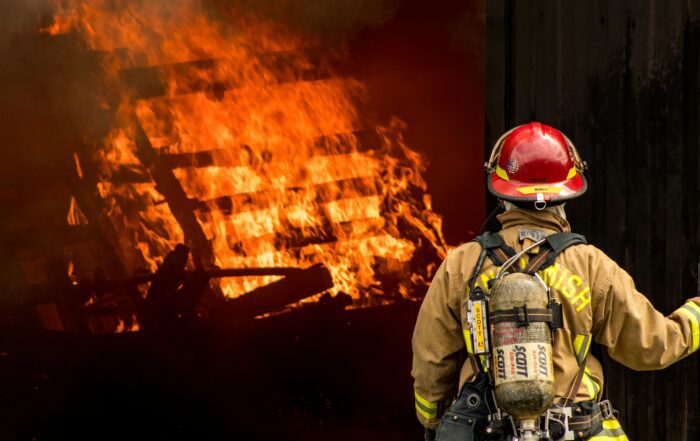
Struggling with reactive maintenance and constant firefighting? Discover six proven steps to reduce breakdowns, improve reliability, and turn maintenance into a driver of business value.
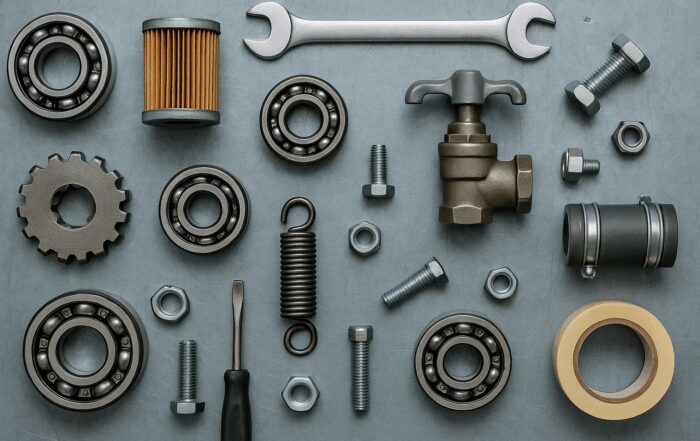
Align your teams with a clear glossary for MRO spare parts management. Improve reliability, cut costs, and optimize inventory with MaxGrip's proven approach.
Five common spare parts challenges that we encounter regularly, illustrated by solutions based on real-world examples.